NIHR20: Embed, Build, Accelerate – Manchester BRC Director’s blog – March 2026
Hello and a very warm welcome to my latest Embed, Build, Accelerate blog as the Director of the National Institute for Health and Care Research (NIHR) Manchester Biomedical Research Centre (BRC).
In this edition, I will be celebrating the milestone 20th anniversary of the NIHR which, since 2006, has been driving life-changing research and innovation to improve the health and wealth of the nation.

As I look back on my career in research so far, I want to celebrate the impact NIHR has made and how it has supported me – and countless others – to make a real difference to people’s lives. NIHR20 is a chance to highlight the pivotal contribution we are all making.
NIHR was formed in 2006 and at that time I was completing a Wellcome Advanced Fellowship and thinking about next steps. As a consultant rheumatologist in clinic, I could see some people responded well to treatment and some didn’t at all. For me, it was about trying to understand why this happened and, to identify how we could match the right treatments to the right patients. I started a prospective study, collecting data and samples from patients who were starting biologic therapy for rheumatoid arthritis.
It was at this point I had my first interaction with the NIHR because they funded what’s now known as the NIHR North West Regional Research Delivery Network (RRDN). Because my study was on the portfolio, I was able to expand and recruit from 50 centres across the UK, supported by research delivery nurses – this was my first experience of how the NIHR could really accelerate research.
In 2011, Manchester was awarded the NIHR Manchester Musculoskeletal Biomedical Research Unit (pictured) and I was the most junior member of the team. I took up the Training Lead role, and that was incredibly important to me as it allowed me to connect with training leads within the NIHR itself.
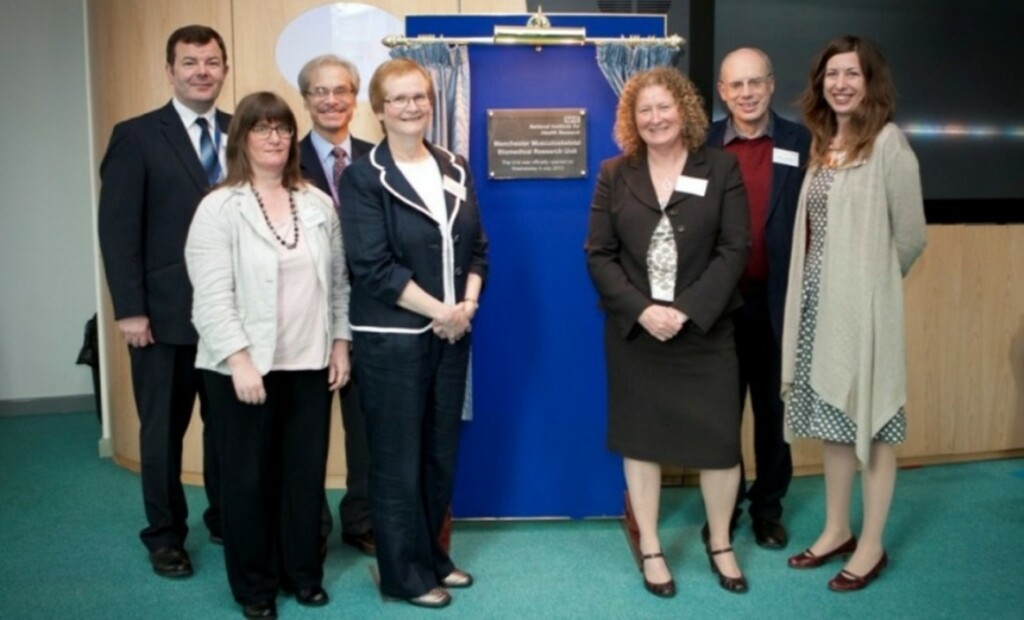
I was invited to training camps and acted as a mentor for trainees. NIHR was still a young organisation then but the experience of being involved in the Musculoskeletal Biomedical Research Unit and, with training, gave me a fantastic understanding of what the NIHR was all about.
NIHR have played a vital role in my career and in 2016 I successfully applied for a Senior Investigator Award. It was an extremely proud moment when I opened that award letter; I was absolutely delighted, as they are so competitive and it really boosted my confidence about going for further leadership roles.
From Training Lead, I became the Rheumatic and Musculoskeletal Diseases (RMD) Theme Lead when the NIHR Manchester BRC was first established in 2017 – a landmark moment with £28.5 million directly invested by NIHR to pioneer life-saving research and new treatments in Greater Manchester.
That was a hugely rewarding role and I remained RMD Theme Co-Lead, and became the Inflammation Cluster Lead, when Manchester BRC’s latest funding round was announced. With £64.1 million from the NIHR in 2022, we expanded our research Themes, and geographical reach into Lancashire and South Cumbria, to become the largest BRC outside of the South East.
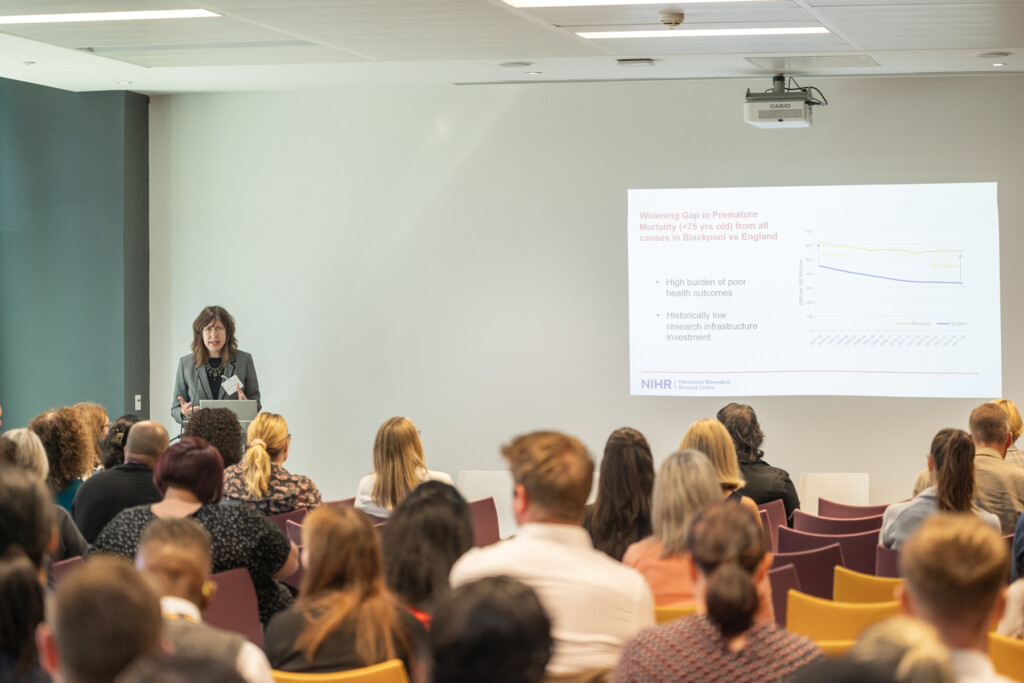
In February 2024, I was then incredibly proud to be appointed as Manchester BRC’s Director. It has been my privilege to oversee the wonderful research being conducted across our 13 Themes and the impact that is having to improve the lives of the patients we serve.
Over the last 20 years, I’ve seen NIHR grow enormously and what it’s done beautifully is identify and strategically invest in the areas that accelerate translational research. Their focus on trying to improve clinical care for patients is amazing, along with the opportunities it provides for people to work in and take part in research.
Greater Manchester now has what I see as a near perfect research ecosystem; strong Universities for discovery science, the BRC to take it through to experimental medicine early phase studies and the NIHR Manchester Clinical Research Facility to deliver those experimental studies. There’s the NIHR Greater Manchester Commercial Research Delivery Centre and NIHR HealthTech Research Centre in Emergency and Acute Care to accelerate research along the translational pathway and we’ve got the NIHR Applied Research Collaboration Greater Manchester to pull through those advances to implementation in practice. There’s also the NIHR Greater Manchester Patient Safety Research Collaboration.
We work well together, we talk to each other, we align around training, inclusive research practices and Patient and Public Involvement, Engagement and Participation. We want to make our research relevant for our diverse communities and help to address health inequalities.
Looking to the future, I hope the NIHR continues to go from strength to strength, attracting investment (for every £1 invested, NIHR research generates £13), leading in innovation and harnessing expertise.
NIHR have also been pivotal in nurturing a skilled and dedicated workforce, providing training opportunities and enhancing career pathways. Training support for Academic Clinical Fellowships and Academic Clinical Lecturers has been invaluable because there’s now a clear academic pathway for people to follow with protected research time.
That came too late for me, but I’ve seen colleagues really benefit and some of our top professors have been through that pathway. It’s formed the foundation of clinical academic training, and I believe that’s a real achievement.
NIHR also promote opportunities for allied health professionals and other healthcare professionals, which I think is brilliant because there are huge benefits to diversifying the clinical academic workforce and conducting research in these disciplines to drive improvements in patient care. Ultimately, it’s about embedding research within day-to-day clinical practice.
Over the last 2 decades, the NIHR has transformed the UK’s health and care research landscape, through the discovery of groundbreaking new treatments and developing new technologies, whilst working in partnership with industry.
My inspiration for that original study was about trying to improve patient care, and this remains my inspiration today. I’m so proud to be surrounded by colleagues who share that vision and strive to make a real difference to people’s lives.
Thank you
Professor Anne Barton
Director of the NIHR Manchester BRC