Innovator Insights blog: Co-designing research with purpose – how collaboration and patient involvement shaped the RAD-PIT study by Melissa Perry

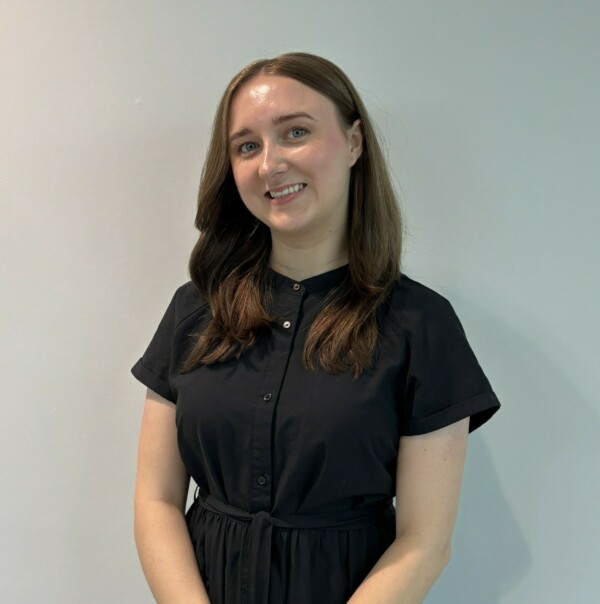
Author: Melissa Perry View External profile (opens in new window)
Research Associate, Living With and Beyond Cancer Theme
Welcome to our Innovator Insights blog series, where National Institute for Health and Care Research (NIHR) Manchester Biomedical Research Centre (BRC) researchers share their innovation journeys and lessons learned.
In this blog, Melissa Perry reflects on her path from clinical trial coordination to leading collaborative research on the RAD-PIT study, showing how early co-design with clinicians, patients, members of the public, and industry transformed the process.
I began my research career as a Clinical Trial Coordinator at The Christie NHS Foundation Trust, later joining the Christie Patient Centred Research (CPCR) team as a Research Assistant. My work spanned mixed-method studies across all disease groups.
In 2023, I undertook a Population Health Fellowship with the Senior Adult Oncology team while completing a Master’s in Public Health at The University of Manchester.
Now back at CPCR as a Research Associate, I manage projects exploring what matters most to patients, reviewing existing research, involving patients and the public, and assessing quality of life. My goal is simple: improve patient care through impactful research.
Working with industry: The RAD-PIT Study
The RAD-PIT study, managed by me and led by Dr Claire Higham, was funded through the NIHR Manchester BRC Innovation and Partnerships Pump-Priming Call to foster industry collaboration. We aimed to develop a protocol for using Macimorelin, a National Institute for Health and Care Excellence (NICE)-approved test which checks whether the body is making enough growth hormone by assessing how well the pituitary gland is working, in teenagers and young adults, and adults receiving radiotherapy- a group which had not previously been tested before.
Damage to the part of the brain which controls hormone production (hypothalamic-pituitary axis) is common after brain or head and neck radiotherapy, yet current gold-standard tests are time-consuming and poorly tolerated. Macimorelin offers a potential solution- it can be taken orally whilst seated rather than given by infusion or injection in bed, requires fewer blood sample collections, causes only occasional milder side effects such as nausea, and significantly shortens the overall testing time- but its feasibility and acceptability needed evaluation.
Building the co-design team
Co-designing study protocols with patients and the public improves acceptance and feasibility of new diagnostic tests. Involving the commercial supplier early was essential for buy-in. We wanted to work collaboratively with patient and public partners with lived experience of brain, head and neck cancer and industry from the start.
We formed a three-way partnership:
- Clinical team: Led by Dr Claire Higham (The Christie NHS Foundation Trust)
- Vocal: Experts in patient and public involvement
- Pharmanovia: Industry partner
Together, we ran co-design workshops to create a protocol that was scientifically robust, acceptable to patients, and supported by all partners.
Overcoming barriers
Academia and industry often use different terminology, which can alienate patient/public partners and create power imbalances. We tackled this by using plain language, explaining acronyms, and offering flexible communication options like email and Teams meetings.
We also co-developed ‘Working Together Guidelines’ with Vocal and patient/public partners to ensure open, respectful communication. Meetings were adapted to suit schedules, and smaller groups encouraged open discussion. All patient/public partners were paid for their time.
Co-designing the protocol
Workshops explored the feasibility and acceptability of using Macimorelin as a diagnostic test. Public advisors shaped resources such as completion of the Population, Intervention, Comparison, and Outcome (PICO) framework, adhering to the Standards for Reporting Diagnostic Accuracy Studies (STARD) guidelines, and advising on patient-facing documents.
One patient/public partner suggested an alternative pathway of using a standard of care confirmatory test if needed, which was not previously considered and is now incorporated into the final protocol. Pharmanovia gained valuable insights into patient needs and the realities of cancer care, strengthening collaboration.
Industry perspective: Why collaboration matters
For Pharmanovia, the RAD-PIT study was more than a research project- it was an opportunity to understand real-world patient needs and refine how their developments could address them.
At Pharmanovia, we focus on meeting unmet patient needs, but we know we can’t do this alone. Collaborations like RAD-PIT allow us to understand the patient experience. Working closely with clinicians and public contributors gave us insights into practical challenges and acceptability that we could never achieve in isolation.
Dr Fernando Osorio, Pharmanovia
This partnership demonstrated how early engagement with healthcare teams and patients builds trust and ensures that innovation aligns with clinical realities. For industry, co-design is not just about compliance- it’s about creating solutions that work for patients and clinicians alike.
Key takeaways
- Involve stakeholders early: Engaging patients, public, and industry from the start transforms research design and opens new opportunities.
- Create inclusive environments: Small, flexible sessions and clear communication empower all voices.
- Value collaboration: Clinicians noted this level of patient involvement was new but agreed it should become standard practice.
Public advisors shared:
The RAD-PIT study gave patients like myself a different perspective on the inner workings of research projects. The active involvement… allowed researchers to gain insights they may have previously overlooked...
Working with the team was fantastic, [I was] made to feel part of the group from the start...
Dr Claire Higham reflected:
Having used this method to engage diverse stakeholders and co-produce the protocol, I don’t think I could go back to doing it any other way.
Next steps
We plan to refine our Working Together Guidelines into a user-friendly resource and submit the RAD-PIT protocol to the NIHR Efficacy and Mechanism Evaluation programme. Future work includes systematic reviews on diagnostic tests and co-design processes and publishing our findings.
Read more blogs in our Innovator Insights series.
Follow Manchester BRC on X/Twitter and LinkedIn to keep updated with the series.
For collaboration opportunities, please email brc-crfpartnerships@mft.nhs.uk.