Our Partners
Our world-leading capabilities in experimental medicine provide an unprecedented opportunity for our research to make a difference, improving health outcomes, reducing health inequalities and driving lasting change for all.
The NIHR Biomedical Research Centre (BRC): Manchester is hosted by Manchester University NHS Foundation Trust in partnership with The University of Manchester and 5 NHS Trusts across Greater Manchester, Lancashire and South Cumbria:
- Blackpool Teaching Hospitals NHS Foundation Trust
- The Christie NHS Foundation Trust
- Greater Manchester Mental Health NHS Foundation Trust
- Lancashire Teaching Hospitals NHS Foundation Trust
- Northern Care Alliance NHS Foundation Trust.
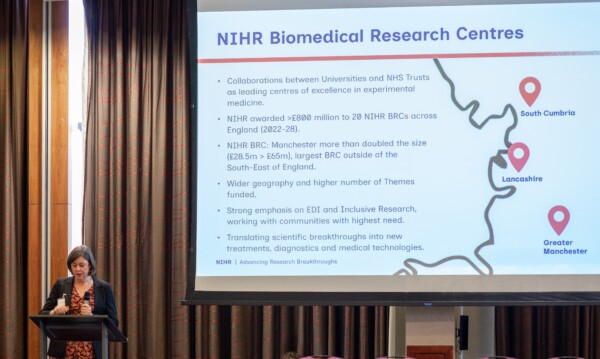
The NIHR BRC: Manchester works collaboratively with patients and communities, industry, charities, NIHR infrastructure partners and many other scientific teams and organisations to rapidly translate our research into routine healthcare for the benefit of people regionally, nationally and internationally.
We aim to build on our existing collaborations and engage new public, charity, and industry partners to continue to deliver on our ambitious plans.
Public and patients
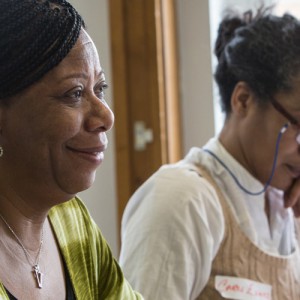
There are many ways that you can help to shape research and make a difference for patients in the future. If you’re a patient, carer or just interested in having a say in research, you can take part in friendly discussion groups, online surveys, creative projects and more.
Innovation and partnerships
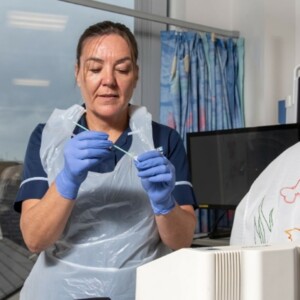
Whether you are a large multi-national company looking to analyse the efficacy of a new therapy, a small or medium sized enterprise (SME) wanting to gain clinical insight into your commercial development, or a BRC researcher who needs help getting a collaborative project off the ground, we want to hear from you.
Key collaborators
Our region is home to a wide array of research and innovation infrastructure and excellence, with Greater Manchester hosting one of the largest collective NIHR Infrastructures in the country.
The NIHR BRC: Manchester works with these partners to transform scientific breakthroughs into diagnostic tests and life-saving treatments for patients.
NIHR Infrastructure
Greater Manchester’s established NIHR Infrastructure Forum, chaired by the NIHR BRC: Manchester Deputy Director, brings together the following organisations with joint boards and shared leadership:
The NIHR Applied Research Collaboration Greater Manchester (ARC-GM) is one of 15 ARCs across England which aim to improve outcomes for patients and the public; improve the quality, delivery and efficiency of health and care services; and increase the sustainability of the health and care system both locally and nationally.
ARC-GM is hosted by Health Innovation Manchester and their over-arching goal is to improve the health of the GM population and the quality and sustainability of the health and social care they receive. This is achieved by co-producing excellent research in areas prioritised by the system and by enhancing its impact through supported implementation into policy and practice.
ARC-GM’s research activity is pivotal in finding new and evaluating better ways of preventing illness and delivering care, ensuring that Greater Manchester continues to be at the leading edge of health innovation, applied research, care and treatment.
The ARC-GM research themes reflect the specific priorities of GM:
- Organising Care
- Economic Sustainability
- Mental Health
- Healthy Ageing
- Digital Health
- Evaluation
- Implementation science.
The NIHR Clinical Research Facility (CRF): Manchester provides opportunities for people of all ages and backgrounds across Greater Manchester to take part in research.
Hosted by Manchester University NHS Foundation Trust in partnership with The Christie NHS Foundation Trust and the Northern Care Alliance NHS Foundation Trust, the NIHR CRF: Manchester is the largest and most comprehensive of the 28 NIHR Clinical Research Facilities, enhancing translation of scientific advances through experimental research.
The NIHR CRF: Manchester operates six world-class facilities based at NHS teaching hospitals across Greater Manchester delivering a diverse range of cutting edge, early phase experimental medicine studies for adults and children at:
- The Christie
- Manchester Royal Infirmary
- North Manchester General Hospital
- Royal Manchester Children’s Hospital
- Salford Royal Hospital
- Wythenshawe Hospital
The NIHR BRC: Manchester aligns closely with the CRF: Manchester and works collaboratively across a number of key areas including jointly-funded posts and initiatives within data management, communications, capacity building, industry and partnerships.
The BRC: Manchester and CRF: Manchester also share a number of joint strategies including;
The NIHR Commercial Research Delivery Centre: Greater Manchester (CRDC:GM) is dedicated to accelerating and delivering high-quality commercial research across Greater Manchester, tackling health inequalities and benefiting the diverse communities it serves.
CRDC:GM’s objectives:
- Increase commercial clinical research across primary, secondary, and community care settings, offering sponsors multi-site, patient-centred trial delivery, supporting the decentralisation of clinical trials.
- Improve access to commercial research opportunities by attracting and delivering relevant commercial research to participants who are representative of the Greater Manchester population.
- Expand capacity and capability to conduct commercial research through training and developing a skilled clinical research workforce and investing in associated infrastructure.
The NIHR HealthTech Research Centre (HRC): Emergency and Acute Care, hosted by Manchester University NHS Foundation Trust was awarded £2.9m of funding from the NIHR from 1 April 2024.
Over the next five years, the HRC will work collaboratively with innovators and commercial companies across the country and internationally to co-develop novel technology solutions for better diagnosis, treatments, and care for patients.
Bringing together NHS clinicians, academics, and the HealthTech industry, along with patients and the public, the HRC will test, evaluate, and commercialise new healthcare technologies to increase the speed, scale, and improvements in emergency care in the community and hospitals.
The Centre is one of 14 NIHR HealthTech Research Centres across England and will be a national exemplar of how public/patient-commercial-clinical-academic collaborations can bridge the gap between primary, community and secondary care to address healthcare challenges.
The NIHR Research Delivery Network (RDN) covers the whole of England and consists of 12 Regional Research Delivery Networks (RRDNs) and a Coordinating Centre (RDNCC), working together as one. This includes the NIHR North West RRDN.
The NIHR RDN is funded by the Department of Health and Social Care (DHSC) to enable the health and care system to attract, optimise and deliver research across England.
The NIHR RDN has a specific role within NIHR to coordinate the delivery of health and care research across England, working in partnership with delivery organisations, researchers, the life sciences industry and other national bodies such as the Health Research Authority and the Devolved Administrations.
The RDN plays a vital role, alongside other parts of NIHR and the wider research community, in achieving the overarching visions and strategies for the NIHR including Best Research for Best Health: the next chapter.
The NIHR Patient Safety Research Collaboration (PSRC): Greater Manchester (GM) aims to make health and care systems safer for everyone.
The NIHR PSRC: GM is one of 6 collaborations across England and is hosted by the Northern Care Alliance NHS Foundation Trust (NCA). Their aim is to improve patient safety across health and social care, along with narrowing the gap in health inequalities.
Working with patients, carers, and health and social care staff, their research takes place across four themes and is led by patient safety experts based at the Universities of Manchester, Nottingham and Leicester.
The BRC: Manchester collaborates with the PSRC: GM on a number of initiatives including training and development opportunities.
The Experimental Cancer Medicine Centre (Manchester) works collaboratively with the NIHR Clinical Research Facility: Manchester at The Christie Hospital, the Manchester Cancer Research Centre, Cancer Research UK Manchester Institute and the University of Manchester.
The centre is renowned for molecular profiling, biobanking, imaging, biomarker discovery and radiotherapy research. It also has strong programmes in prevention and early detection, including both adult and paediatric activity.
Manchester ECMC is also committed to improving widespread patient access to early-phase clinical trials.
There is also a paediatric ECMC in Manchester.
Other NIHR schemes provide broader research support and opportunities for collaboration across the infrastructure. Read more about these initiatives.
Regional and national
The NIHR BRC: Manchester works with exceptional research and innovation partners and infrastructure from across the North West, and the rest of the country, including:
Regional collaborations
The Christabel Pankhurst Institute for Health Technology Research and Innovation (“the Pankhurst”) has a mission to promote needs-led health technology research and innovation, providing end-to-end support for translation into practice, and acting as an external flagship for The University of Manchester’s health technology portfolio. As a unique partnership between The University of Manchester, NHS, business, and local government with an initial investment of £25million, it forms an important part of the region’s health innovation ecosystem to enable translation of world-leading research into new products and services.
The institute’s flagship building is located on the University of Manchester’s campus on the Oxford Road Corridor. This location, as well our partnership with co-founders, Manchester University NHS Foundation Trust, Greater Manchester Combined Authority, and Bruntwood SciTech, provides support for business growth by facilitating better collaboration between the NHS, researchers, and industry.
Achieving benefit from health technologies is a multi-faceted challenge which requires input from across the spectrum of academic disciplines. Alongside a focus on science and engineering, particularly digital technologies, AI and advanced materials, the Institute fosters a multidisciplinary approach to research and achieving impact. Its cross-cutting themes include responsible and inclusive innovation, translation, multi-omic health technologies (analysis and interpretation of a combination of different biological datasets such as ‘genomics’ and ‘transcriptomics’ which are collected from molecular technologies), Team Research, and digital health inequities.
The BRC: Manchester’s Digital Infrastructure team are hosted by the Pankhurst, working together with the BRC on joint translational research activities and the development of health solutions that will benefit patients and address local healthcare needs across Greater Manchester. As a critical element of the “One Manchester” health innovation ecosystem, the institute:
- facilitates multidisciplinary working practices
- acts as a funnel for providing world class academic expertise
- nurtures cross-sectoral collaborations and partnerships to accelerate the development of health innovation
Translation Manchester brings together a network of support, facilities and expertise to make the pathway to translation quicker and easier.
The NIHR BRC: Manchester and Translation Manchester partner on a number of strategic investment initiatives and training programmes including the Innovator Training Scheme, the Innovation Labs, and the Translation Manchester Accelerator Awards.
Health Innovation Manchester (HInM) is an academic health science and innovation system, at the forefront of transforming the health and wellbeing of Greater Manchester’s 2.8 million citizens.
Health Innovation Manchester work on behalf of Greater Manchester (GM) health and care and academic system partners to discover, develop and deploy innovation aligned to the needs of GM citizens, as well as supporting economic development across the city region. We bring together our Academic Health Science Network (AHSN) and Academic Health Science Centre (AHSC) functions, adding in translational research capabilities through our NIHR infrastructure that includes the NIHR Applied Research Collaboration GM (ARC-GM), NIHR Biomedical Research Centre (BRC): Manchester, NIHR Patient Safety Research Collaboration (PSRC): Greater Manchester and NIHR Clinical Research Facility (CRF): Manchester with oversight co-ordination from our NIHR/NHSE designated Manchester Academic Health Science Centre (MAHSC). This resource is further supplemented by a major focus on digital, including hosting the GM ICS digital transformation office).
Health Innovation Manchester plays a pivotal role in bringing forward a constant flow of targeted innovations and putting them through an effective but streamlined evaluation process so they are adopted at pace and scale across GM’s 10 localities, along with promoting GM on a national and international, building on our reputation as a pioneering city-region.
How we work together for the benefit of our population
In Greater Manchester, we have the unique ability to deliver innovation into frontline care at pace and scale thanks to our £6bn devolved health and social care system, unrivalled digital assets and ambitions, exceptional academic and research capability and thriving industry partnerships. Our collective ambition is to make Greater Manchester one of the best places in the world to grow up, get on and grow old.
Through the MAHSC Executive our NIHR infrastructure works with Health Innovation Manchester to ensure that the novel treatments and interventions it develops are accelerated to implementation through a dedicated pipeline across our newly formed integrated care system. Utilising Health Innovation Manchester’s network of external partners, our research findings can be further deployed regionally, nationally and internationally.
Find out more about Health Innovation Manchester’s work.
Health economics provides a suite of research methods to study and inform how to use resources to improve the health of populations.
At the NIHR Biomedical Research Centre (BRC): Manchester, health economics is delivered by a team of researchers who are based in the Manchester Centre for Health Economics at The University of Manchester. Professor Katherine Payne is Health Economics Lead at the NIHR BRC: Manchester. The team’s aim is to measure the potential value of new medicines or healthcare technologies and understand what healthcare professionals, patients, carers and the public think about these interventions.
Health economics is embedded in several Themes and areas across BRC: Manchester including:
Cancer Prevention and Early Detection
- Further development of an economic model (MANC-RISK-SCREEN) to evaluate risk-based breast screening strategies to include the impact of starting high-risk women on medicines to prevent cancer and taking account of uncertainty in the risk-prediction algorithm.
Next Generation Therapeutics
- Characterising the literature that has produced early economic evaluations of emerging new medicines called ‘next generation therapeutics’.
- Investigate the feasibility of using Social Impact Bonds to finance research and development activities for the development of next generation therapeutics.
- Using a combination of early (or development-phase) health technology assessment methods to quantify the burden of disease, cost of illness, and potential value of a gene therapy for rare genetic bladder conditions.
Rheumatic and Musculoskeletal Diseases
- Describing the role of stated preference studies to understand how to design digital health interventions to maximise their use in the healthcare system for the benefit of different populations.
- Understand the potential cost-effectiveness of an intervention, including a blood test to measure drug levels and a follow-up telephone call from a clinician, to improve adherence to methotrexate, a type of medicine used to treat inflammatory conditions. This analysis involved a micro-costing study and early economic analysis to inform the design of a future trial by using data from a feasibility study called ‘MIRA’ (Methotrexate use Improvement in Rheumatoid Arthritis using Biomarker Feedback).
- Understanding the potential clinical and cost-effectiveness of tapering the use of biologics for the treatment of people with inflammatory arthritis in remission.
- Understanding and measuring the quantitative link between work productivity (presenteeism measuring using the Work Productivity Activity Impairment (WPAI)) and health status (measured using the EQ5D-5L) for use in economic evaluations of workplace interventions in rheumatology.
Inclusive Research
- Understanding what factors influence clinicians and specialist nurses to recruit patients to the British Society for Rheumatology (BSR) biologics register motivated by the observation that lower than expected numbers of people with different ethnicities and across the Index of Multiple Deprivation (IMD) are recruited to the BSR biologics register.
- Using a method called ‘Aggregate distributional cost-effectiveness analysis’ to understand the equity-impact alongside cost-effectiveness of biologics by IMD motivated by the observation of unequal recruitment of people taking a biologic to the BSR biologics register by IMD.
National infrastructure
The Northern BRC Alliance comprises of Operations Leads from across the other Northern BRCs (Leeds, Sheffield, and Newcastle), chaired by the BRC: Manchester Operations Director. Working with the Northern BRC Alliance, we promote NIHR initiatives, for the benefit of patients, including the NIHR IMID BioResource and Translational Research Collaborations (TRCs).
We promote collaborations across research Themes and through the Northern BRC Operations Network we develop capabilities, skills, knowledge-exchange and networking opportunities to deliver good practice, sharing experience across infrastructures in the North of England for patient benefit and to support delivery of local, regional and national priorities.
The Northern Health Science Alliance (NHSA) is the North of England’s health partnership – bringing together ten universities, ten research-intensive NHS Trusts and four Academic Health Science Networks, across a population of 16 million people.
The NHSA’s mission is to unlock the combined potential of the North’s health research and innovation assets for the benefit of its people and economy.
The NHSA networks across advanced therapies, diagnostics, data integration and other disciplines are connecting and mobilising excellence at scale throughout the North and beyond.
The BRC: Manchester works with the Northern BRC Alliance to contribute to NHSA activities including publications, seminars, industry engagement and networking programmes. This helps to connect and reinforce the position of the BRCs within the wider health and life science ecosystem, stimulating collaboration and celebrating impact.
We collaborate with other Biomedical Research Centres across the country to support research translation, shared learning and workforce development.
Nationally, the NIHR BRC: Manchester leads the BRC Directors Forum (Chair: Professor Anne Barton) and BRC Managers Forum (Chair: Lisa Miles), which provide opportunities to exchange information, collaborate and share good practice across BRCs.
Strategic cross-city alliances include the Cambridge x Manchester Partnership, designed to expand and strengthen innovation ecosystems in both cities, drive investment, and define a new model of collaboration for the UK.
Page banner image of key speakers at North West NIHR20 celebration event in Liverpool, October 2026.